
How ISO Certification Helps Australian Businesses Win Government and Enterprise Contracts

There is a conversation that happens regularly inside growing Australian businesses.
A tender comes through. The opportunity is significant. The business has the capability, the experience, and the team to deliver.
Then someone reads the pre-qualification requirements.
ISO 9001 certification required. ISO 45001 preferred. ISO 14001 mandatory for contracts involving environmental impact.
And the conversation stops.
Not because the business cannot get certified. Because no one knew it was coming, and the tender closes in six weeks.
This is one of the most common and most preventable commercial problems we see inside scaling organisations. ISO certification is not just a compliance exercise. It is a commercial qualification. And businesses that treat it as one plan for it accordingly.
How Government and Enterprise Procurement Actually Works
The Three Levels of Australian Government Procurement
Government procurement in Australia operates across three levels: federal, state and territory, and local government. Each level has its own framework, but they share a consistent principle.
Agencies are required to assess supplier capability and risk before awarding contracts.
ISO certification is one of the most widely accepted ways a supplier demonstrates that capability. It does not substitute for experience or price competitiveness. But it signals that systems exist, that processes are auditable, and that the business operates with a level of accountability that reduces risk for the buyer.
That signal matters more than most businesses realise until they are excluded from a shortlist.
Mandatory Criteria Versus Scored Criteria
ISO certification appears in tender documents in two ways.
The first is as a mandatory pass or fail requirement. If the certification is listed as a condition of participation and the business does not hold it, the submission is non-compliant and will not be evaluated. There is no workaround and no opportunity to demonstrate equivalent capability.
The second is as a scored evaluation criterion. A tender might allocate points to quality management capability, with ISO 9001 certification being the clearest path to maximum points in that category. Uncertified businesses can still submit, but in practice, certified competitors will consistently outscore them.
Both scenarios have the same outcome for the unprepared business: they lose work they were otherwise capable of winning.
The Quiet Exclusion Most Businesses Never See
Many businesses assume they are competing for contracts they are not actually competing for.
Pre-qualification panels, supplier registers, and approved vendor lists increasingly require ISO certification as a baseline condition for inclusion. Businesses that are not on these lists do not receive tender invitations. They are not rejected. They are simply not visible.
This is the hidden commercial cost of uncertified operations. Not the tenders that come back with a "no." The tenders that never arrive.
Which ISO Standards Appear in Australian Tenders
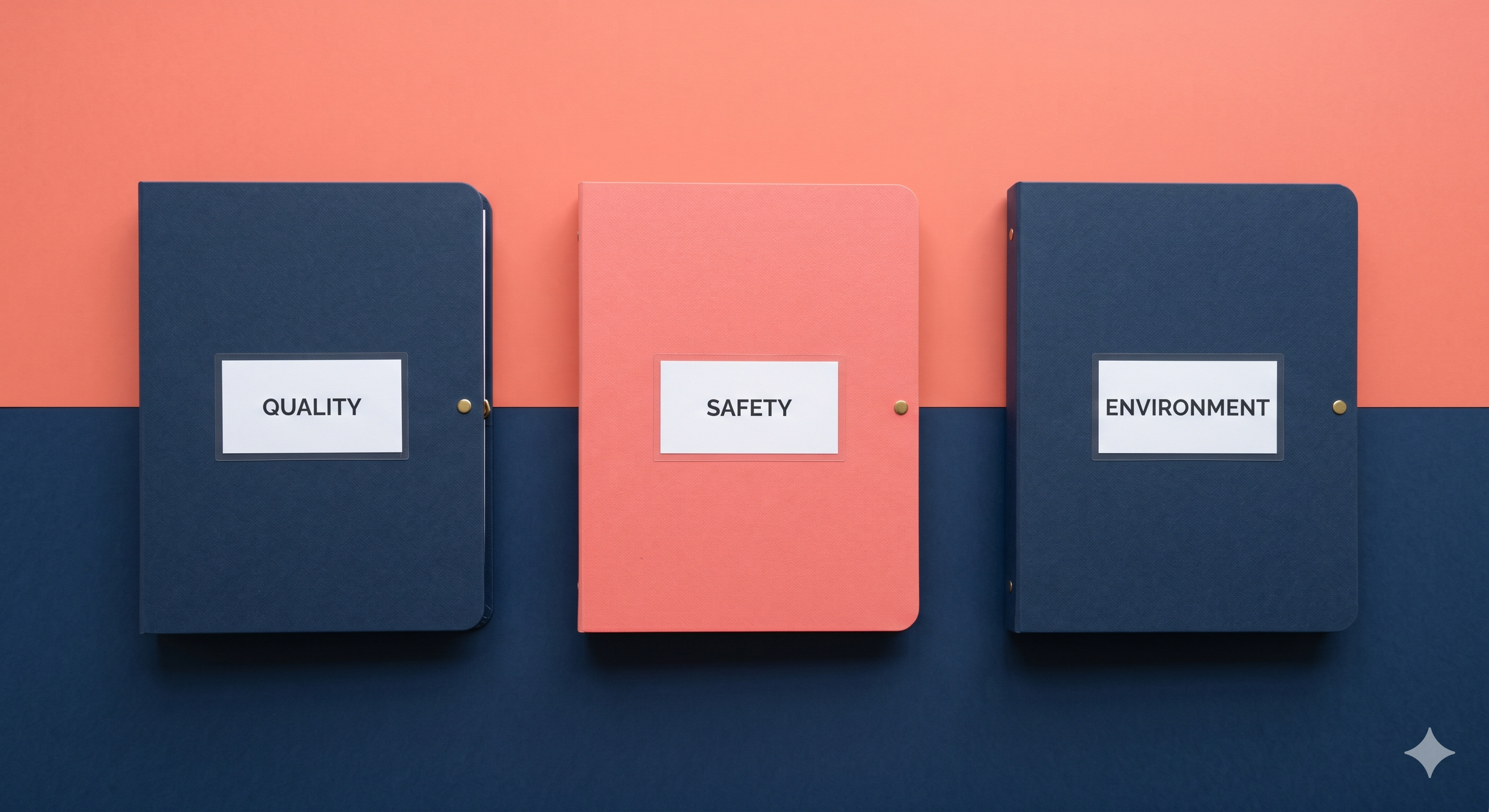
ISO 9001: Quality Management
ISO 9001 is the most frequently required standard across all levels of Australian government procurement.
When a tender document references ISO certification without specifying the standard, it almost always means ISO 9001. It is required across construction, professional services, manufacturing, IT services, consulting, and facilities management.
For businesses pursuing government and enterprise contracts for the first time, ISO 9001 is the entry point.
ISO 45001: Occupational Health and Safety
For contracts involving physical work, construction, site-based services, or maintenance, ISO 45001 is increasingly expected alongside ISO 9001.
State infrastructure agencies, transport departments, and facilities management contracts are the most common procurement contexts where ISO 45001 is listed. In high-risk industries including construction, civil works, and traffic management, it has effectively become a baseline requirement for serious contractors.
In Australian certification, auditors verify alignment with applicable WHS legislation at the federal or state level. This linkage between the management system and legal compliance is exactly what government procurement officers are looking for.
ISO 14001: Environmental Management
Environmental requirements in government procurement have grown significantly across Australia over the past several years.
ISO 14001 is mandated in construction, infrastructure, resources, waste management, and any contract where environmental compliance is a material delivery risk. Federal and state sustainability policies now flow directly into procurement decisions, and suppliers without environmental certification are increasingly finding themselves outside the consideration set for major contracts.
The Integrated Certification Advantage
Many larger government contracts in construction and infrastructure require ISO 9001, ISO 45001 and ISO 14001 simultaneously.
Businesses that hold all three through an integrated management system are positioned significantly better than those managing three separate certification cycles. An integrated system means one governance architecture, one set of internal audits, one management review, and one coherent set of documentation.
It is not just more efficient to build. It is a stronger signal to procurement panels that the business operates with genuine management maturity rather than three disconnected compliance projects.
Why Accreditation Is Not a Detail
JAS-ANZ and What It Means for Tenders
When a government tender requires ISO certification, it means certification issued by a JAS-ANZ accredited certification body.
JAS-ANZ is the Joint Accreditation System of Australia and New Zealand. Accredited certification bodies operating in Australia include SGS, SAI Global, BSI, LRQA, and Bureau Veritas.
A certificate issued by a non-accredited body will not satisfy a government tender requirement, regardless of how it appears on paper. Procurement officers check. Submissions built on non-accredited certificates are rejected.
This is one of the most costly mistakes a business can make in the certification process: investing in certification only to discover the certificate is not commercially recognised.
Certificate Scope and Tender Alignment
A certification scope that does not accurately reflect the services or products being offered in a tender can also create problems.
If the scope is written too narrowly, the certificate may not cover the contract activity. If the scope is generic, it may not satisfy specific procurement requirements. Scope design is a strategic decision, not an administrative one.
Organisations building toward government and enterprise contract qualification should design their certification scope with the tenders they intend to pursue clearly in mind.
Building a Certification Strategy Around Commercial Objectives
Start With the Tenders You Want to Win
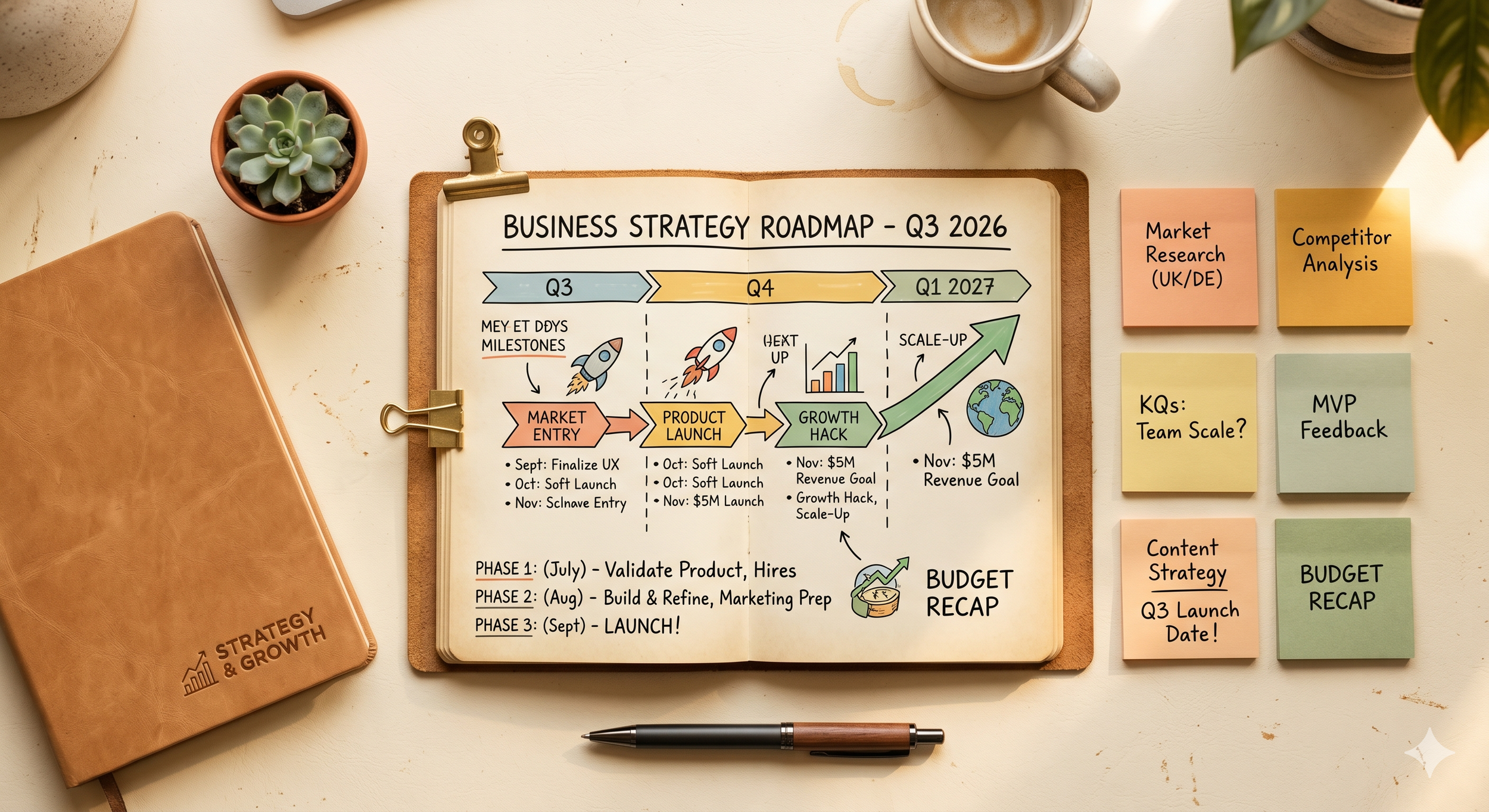
The most effective certification strategy begins with a clear picture of commercial objectives.
Which contracts does the business want to pursue in the next 12 to 24 months? Which standards appear most frequently in those tenders? What is the realistic implementation timeline relative to the next significant tender deadline?
Answering these questions before beginning implementation shapes every subsequent decision, including which standards to pursue, in what order, and at what pace.
Work Backwards From Tender Deadlines
For a business with no existing management system, a realistic timeline to certification is twelve to sixteen weeks with structured implementation and appropriate leadership engagement.
That timeline is not abstract. It has direct implications for which upcoming tenders a business can qualify for and which it cannot.
Businesses that begin the certification process after a tender opportunity appears are almost always too late. The organisations consistently winning government and enterprise contracts are the ones that hold certification before the opportunity arises, not the ones scrambling to get it once it does.
Integrated Certification Is More Efficient Than Sequential
Because ISO 9001, ISO 14001 and ISO 45001 share a common high-level structure, implementing all three simultaneously is significantly more resource-efficient than pursuing them one at a time.
The overlap in policy, scope, risk management, internal audit, management review, and corrective action processes means the marginal cost of adding a second or third standard to an active implementation is relatively small.
For businesses that know they will eventually need all three, the integrated pathway is the most cost-effective and the most commercially logical approach.
What Procurement Officers Are Actually Looking For
Evidence of Operational Maturity
ISO certification is a proxy. What procurement officers are actually assessing is whether the business has the operational maturity to deliver on a contract without creating problems for the agency.
A certified business that cannot explain how its quality system operates in practice, whose team cannot speak to their documented procedures, or whose records are in disarray is not demonstrating the maturity the certification is meant to signal.
The management system must be genuine. It must operate as part of the business, not be retrieved for audit season and filed away until next time.
The Audit Interview
During a certification audit, auditors interview staff at multiple levels of the organisation. They are assessing whether the management system is embedded in day-to-day operations or exists only in a documentation folder.
When government procurement panels conduct reference checks or capability assessments, they are asking a similar question. Does this organisation actually operate the way it says it does?
A well-implemented ISO management system answers that question clearly. A poorly implemented one creates doubt exactly when confidence is most needed.
Australian Certification Requirements for Government Tender Qualification
For ISO certification to satisfy Australian government tender requirements:
The certification body must be accredited by JAS-ANZ
The certificate must be current, not expired or suspended
The certification scope must cover the activities described in the tender
Documented information must be formally controlled and current
Legal registers must reference applicable Australian federal and state legislation
Auditors verify both documentation and implementation, not documentation alone
Meeting these requirements is not complicated when the management system has been built correctly from the start. It becomes difficult when certification has been treated as a documentation exercise rather than an operational one.
Building Toward the Contracts You Want
ISO certification is infrastructure.
The businesses that use it well build their management systems around the commercial outcomes they are trying to achieve, not around the minimum requirements for a certificate. They design their scope to align with the tenders they want to win. They build their systems to operate continuously, not activate for audit. They invest in training so that leadership and frontline teams can both speak credibly to how the business is managed.
When procurement panels evaluate those businesses, what they see is confidence. Documented, auditable, genuinely operational confidence.
That is what wins contracts.
KAKSCORP's ISO Launch program is a twelve-week intensive engagement designed specifically for businesses between $200K and $15M that are building toward government and enterprise contract qualification. Our implementation model delivers 100 percent first-time certification success and management systems designed to operate as genuine business infrastructure, not compliance paperwork.
If you are ready to understand what your certification pathway looks like, book a complimentary strategy call. We will give you a straight answer.
