
What Does ISO Certification Actually Cost in Australia? (And Is It Worth It?)

Every week, a business owner asks a version of the same question.
"How much is this actually going to cost, and how long is it going to take?"
It is a fair question. And the fact that most of the internet answers it with "it depends" is exactly why businesses end up overbudgeting, underpreparing, or walking into a process they were not ready for.
The honest answer exists. It just rarely gets given plainly.
Before diving into numbers, it is worth understanding how certification bodies approach pricing. In Australia, all ISO certification bodies must be accredited by JAS-ANZ. When quoting, accredited bodies calculate audit duration using standardised formulas based on:
Employee headcount
Number of business locations
Industry risk level
Process complexity
Number of ISO standards being certified simultaneously
Maturity of existing systems
Understanding these factors removes the mystery from the pricing conversation.
ISO Certification Costs in Australia: The Real Numbers
Small Business (5 to 15 Employees)
Certification Audit Cost
The certification audit itself, Stage 1 and Stage 2 combined, typically falls between $3,000 and $7,000 for organisations in this size range.
This is the fee paid directly to the accredited certification body.
With Consulting and System Setup
When full implementation support is included, gap analysis, documentation build, internal audit preparation, and management system architecture, the total Year 1 investment for a small business sits between $10,000 and $18,000.
This is the number that matters for budget planning.
Annual Surveillance Audits
After certification, surveillance audits are required to maintain the certificate.
For small businesses, expect:
Annual surveillance: $2,000 to $5,000
Recertification audit in Year 3: approximately 60 to 80 percent of initial audit cost
Three-Year Cycle Cost
When budgeting for ISO certification, the three-year certification cycle total is the meaningful figure.
For a ten-employee organisation, a realistic three-year cycle budget is:
Year 1 (implementation and certification): $10,000 to $18,000
Year 2 (surveillance): $2,000 to $5,000
Year 3 (surveillance and recertification): $4,000 to $8,000
Medium Business (15 to 50 Employees)
Certification Audit Cost
The certification audit cost for medium organisations typically falls between $7,000 and $15,000 depending on scope, locations, and industry complexity.
With Consulting and System Setup
Full implementation and certification for a medium business typically ranges from $20,000 to $35,000 in Year 1.
Annual surveillance: $5,000 to $10,000
Recertification in Year 3: $7,000 to $15,000
Three-Year Cycle Cost
For a thirty-employee organisation, a realistic three-year cycle budget is:
Year 1 (implementation and certification): $20,000 to $30,000
Year 2 (surveillance): $5,000 to $8,000
Year 3 (surveillance and recertification): $10,000 to $15,000
Large Business (50 to 200 Employees)
Certification Audit Cost
For larger organisations, the certification audit cost is calculated on a longer audit day count.
Stage 1 and Stage 2 combined typically falls between $15,000 and $30,000 for organisations in this range, with multi-site operations attracting additional audit days per location.
With Consulting and System Setup
At this scale, implementation involves coordinating across multiple operational leaders, business units, and often multiple physical sites.
Total Year 1 investment typically sits between $40,000 and $80,000 when full consulting support is included.
Annual surveillance: $10,000 to $20,000
Recertification in Year 3: $15,000 to $25,000
Three-Year Cycle Cost
For a one-hundred-employee organisation across two sites, a realistic three-year cycle budget is:
Year 1 (implementation and certification): $40,000 to $80,000
Year 2 (surveillance): $10,000 to $20,000
Year 3 (surveillance and recertification): $15,000 to $25,000
At this scale, the commercial return on certification is typically recovered within a single qualifying tender or enterprise contract.
Where the Money Actually Goes
Pre-Certification Costs (60 to 80 Percent of Total Investment)

Gap Analysis
The gap analysis identifies where current processes do not yet meet ISO standard requirements.
This step defines the scope of implementation work required and shapes the entire documentation and system build that follows.
Cost range: $2,000 to $5,000
Documentation Development
Documentation is one of the most time-intensive elements of ISO implementation.
Required documented information includes:
The quality, safety, or environmental policy
Scope of the management system
Objectives and performance targets
Operational procedures and controls
Legal and compliance registers
For organisations without existing documentation, this is where consultant time is most heavily invested.
Cost range: $5,000 to $20,000 depending on complexity
Internal Audit
Before the certification audit, an internal audit must be conducted to identify any outstanding nonconformities.
This step is mandatory under ISO 9001:2015, ISO 14001:2015 and ISO 45001:2018.
Cost range: $1,000 to $3,000
Management Review
Management review is a mandatory certification requirement under all three ISO standards.
Before the certification audit, top management must conduct a formal review of the management system. This review must produce documented outputs covering:
Decisions on improvement opportunities
Resource allocation
Changes to policy or objectives
Assessment of risk management effectiveness
Certification bodies look closely at management review records during Stage 1 audit. Organisations that treat this as a checkbox exercise rather than a genuine leadership conversation consistently produce weaker audit outcomes.
Cost range: included within consulting scope, or $1,500 to $3,000 if facilitated separately
Staff Training
Certification bodies assess not only documentation but whether teams can demonstrate understanding of the management system.
Staff must be able to explain how processes operate and how they contribute to quality, safety, or environmental performance.
Cost range: $2,000 to $5,000
How Long Does ISO Certification Take?

Realistic Timeline for Organisations Starting from Scratch
For businesses with no existing management system, a realistic timeline to audit-readiness is twelve to sixteen weeks when the process is managed with appropriate leadership engagement and structured implementation.
This assumes:
Prompt leadership availability during gap analysis and system design
Timely completion of documentation reviews
Internal audit conducted six to eight weeks before the certification audit
Management review completed and documented before Stage 1
Stage 1 audit completed before Stage 2 is scheduled
What Affects the Timeline
Several factors extend or compress the certification timeline:
Existing documentation significantly reduces the setup phase
Multi-site operations require additional coordination and audit time
High-risk industries may require more detailed operational controls
Integrated certifications across multiple standards add scope but not proportionally more time
Certification cannot be completed responsibly in four weeks. Systems implemented at that pace typically produce nonconformances at surveillance audit.
Integrated Certification Timelines
Organisations pursuing ISO 9001, ISO 14001 and ISO 45001 simultaneously can typically do so within the same twelve to sixteen week window.
Because all three standards share a common high-level structure, the overlap in documentation, policy, internal audit, management review, and corrective action processes means integrated implementation is more efficient than sequential certification.
Which Standard Should You Pursue First?
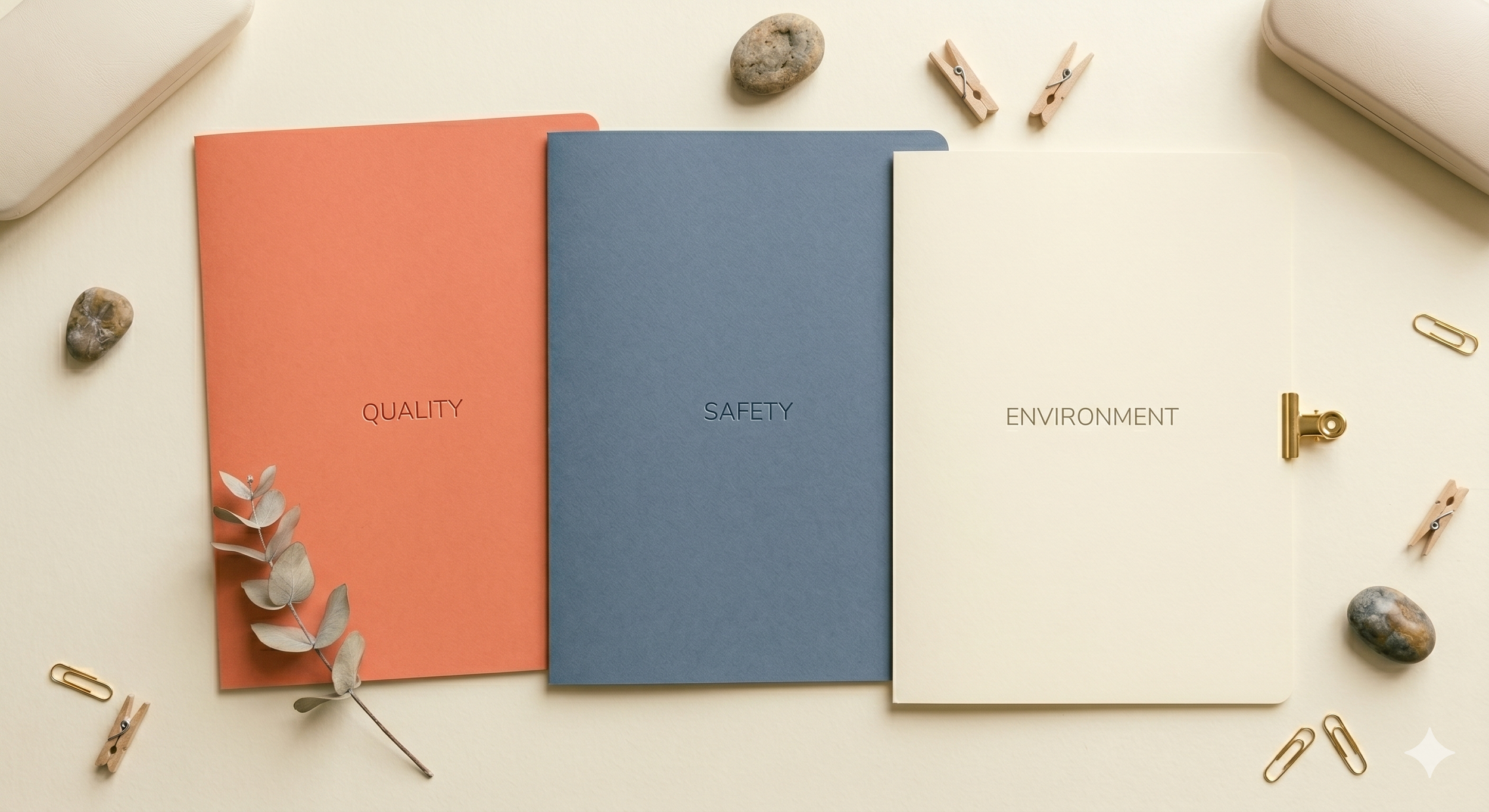
ISO 9001: Quality Management
ISO 9001 is the entry point for most Australian businesses entering the ISO certification pathway.
It is almost universally required for:
Government and local council procurement
Enterprise and tier-one contractor qualification
Public sector and infrastructure tender panels
If the primary commercial objective is qualifying for contracts, ISO 9001 is where to start.
ISO 45001: Occupational Health and Safety
ISO 45001 is frequently required alongside ISO 9001 for businesses operating in high-risk environments.
This standard is commonly required in:
Construction and civil works
Facilities management
Traffic control and road infrastructure
Manufacturing and logistics
In Australian certification, auditors verify alignment with applicable WHS legislation at the state or federal level.
ISO 14001: Environmental Management
ISO 14001 is increasingly mandated by sustainability-focused procurement frameworks across infrastructure, government, and large enterprise supply chains.
The standard requires organisations to identify environmental aspects, assess associated impacts, establish a compliance obligations register, and demonstrate continual improvement of environmental performance.
For businesses in construction, resources, utilities, and waste management, this certification is becoming a baseline requirement rather than a differentiator.
The Case for Integrated Certification
Pursuing ISO 9001, ISO 14001 and ISO 45001 simultaneously through an integrated management system is the most cost-effective approach for most organisations.
Building a single governance architecture across quality, safety, and environment is significantly more efficient than implementing three separate systems across three separate certification cycles.
It also reflects the way effective management systems actually work, as a single operational framework rather than three disconnected compliance projects.
The Hidden Cost Nobody Calculates
Non-Certification Is Not Cost-Free
Many businesses treat delayed certification as a way to avoid expenditure.
In practice, it is not cost saving. It is a revenue deferral.
Businesses that do not hold ISO certification are being quietly excluded from tender shortlists without receiving a rejection. Pre-qualification requirements increasingly list ISO certification as a baseline condition rather than a preference.
The business without certification does not receive a "no." It simply does not appear on the list.
Certification as Commercial Infrastructure
ISO certification, when implemented correctly, is not a compliance cost.
It is the governance infrastructure that enables an organisation to operate efficiently, reduce incident rates, accelerate onboarding, satisfy enterprise procurement requirements, and demonstrate operational maturity to clients, insurers, and investors.
The management system that supports certification, built with appropriate architecture, creates visibility, accountability, and operational clarity that persists long after the auditor leaves.
Australian Certification Requirements
For ISO certification in Australia:
Certification bodies must be accredited by JAS-ANZ
Documented information must be formally controlled
Legal registers must reference applicable Australian federal and state legislation
Records must be retained for defined periods
Auditors verify both documentation content and operational implementation
The mandatory documented requirements are those defined in ISO 9001:2015, ISO 14001:2015 and ISO 45001:2018.
No additional Australian-specific documentation is mandated beyond demonstrating compliance with applicable Australian laws.
A Note on Certificate Value
Not all ISO certificates carry equal weight in Australian tendering.
Certificates issued by JAS-ANZ accredited certification bodies, including SGS, SAI Global, BSI, LRQA, and Bureau Veritas, are recognised by government procurement panels and enterprise pre-qualification systems.
Certificates issued by non-accredited bodies are not.
When evaluating cost, the accreditation status of the certification body is not a detail. It determines whether the certificate is commercially useful.

If you are ready to understand what ISO certification would look like specifically for your organisation, KAKSCORP offers a complimentary strategy call. We will give you a straight answer on scope, timeline, and investment with no obligation.
