
Your First Month in a New Business: How to Read the System Before You Change It
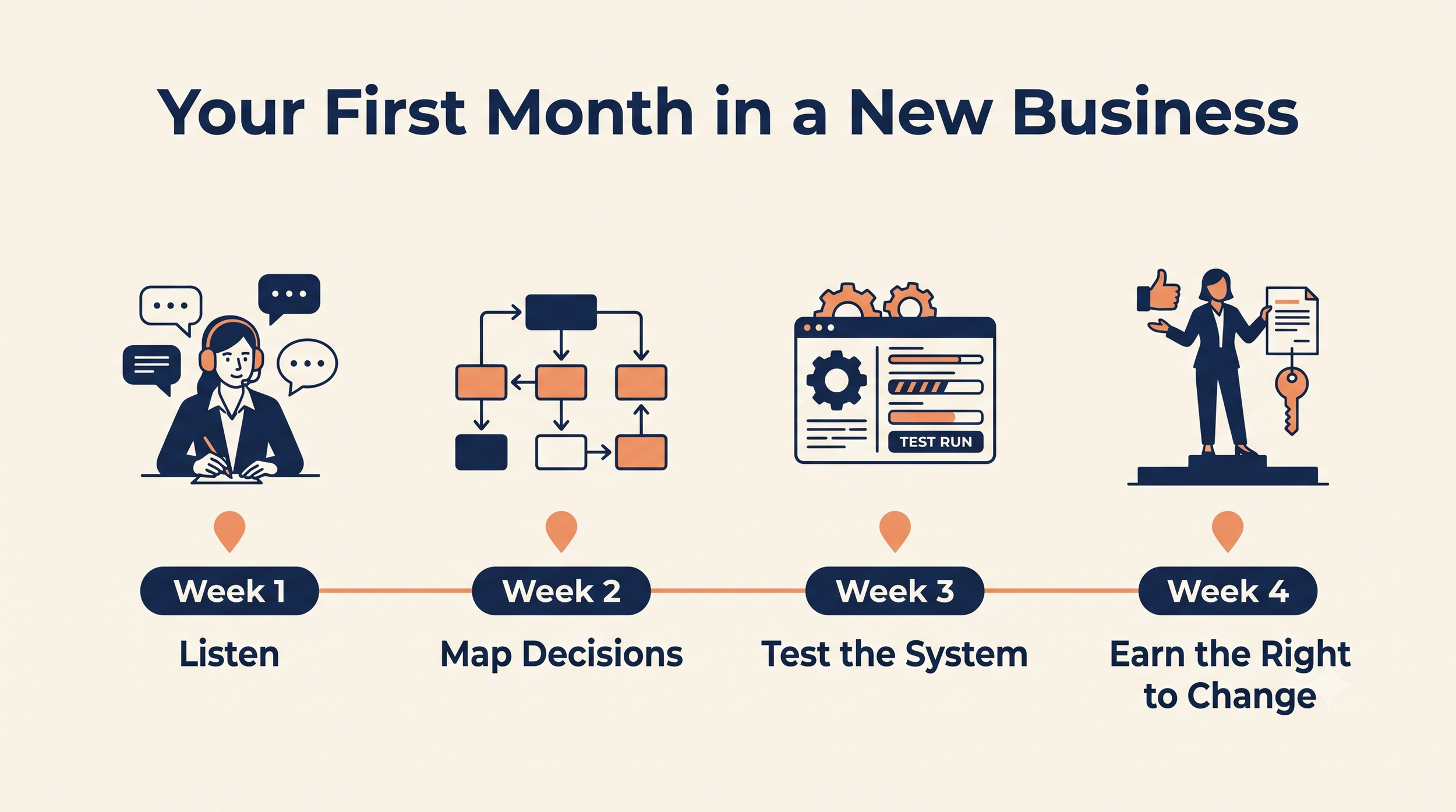
The first month in a new business is one of the most misunderstood periods in professional life. New joiners feel pressure to prove value quickly. Leaders who hired them expect early wins. And the temptation to start changing things, fixing things, and announcing things is strongest at exactly the moment when understanding is weakest.
Most first month failures are not failures of competence. They are failures of reading. The new person acted on how the business appeared to work, rather than how it actually works. They trusted the org chart, the procedures folder, and the onboarding pack, and missed the informal operating system running underneath all three.
This article outlines a structured approach to the first thirty days in any new business. It applies whether you are joining as a manager, a specialist, or a senior hire. The principle is the same: your first month is a diagnostic exercise, not a delivery exercise.
Every Business Runs Two Systems at Once
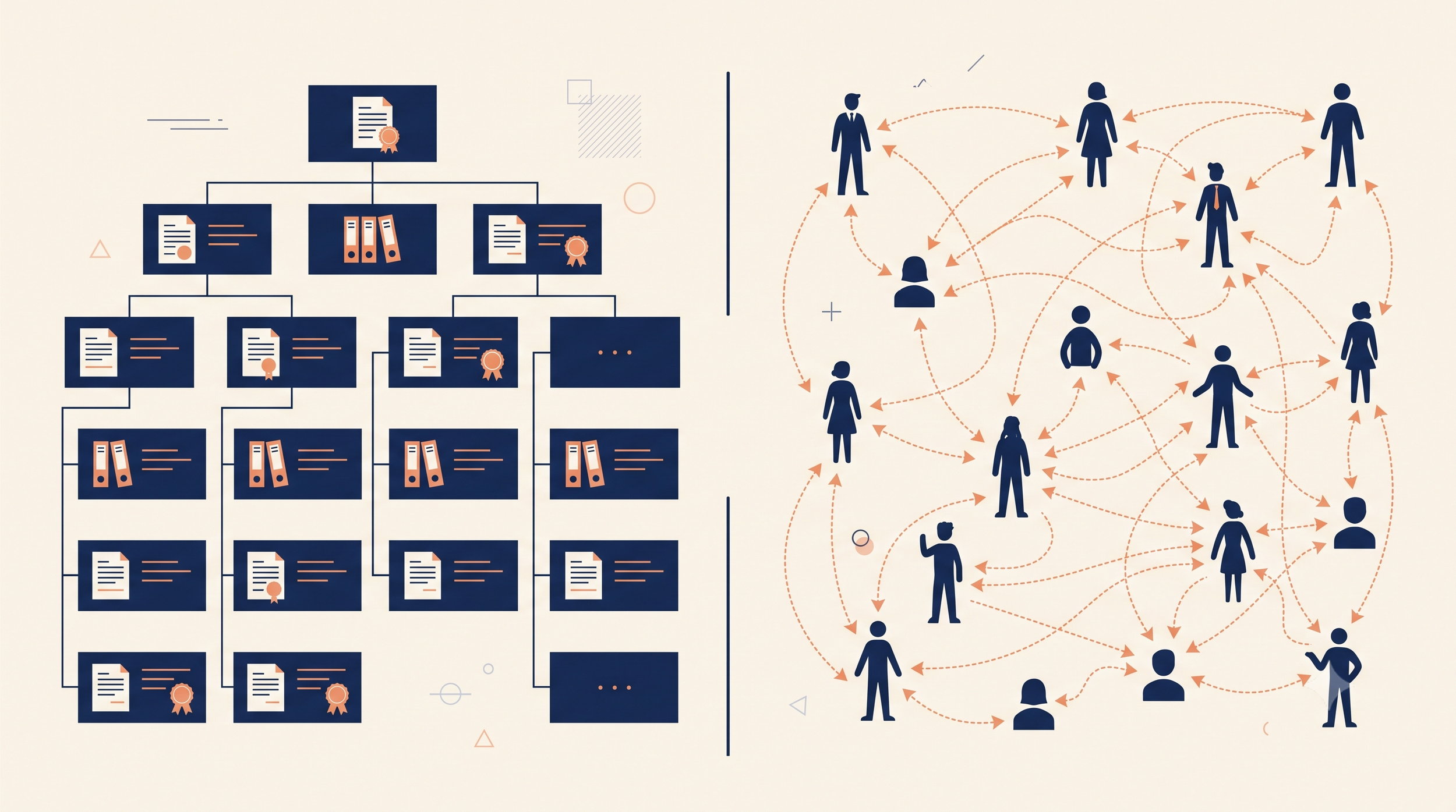
Every organisation operates two systems simultaneously. The first is the documented system: the org chart, the procedures, the policies, the position descriptions, and, in certified businesses, the ISO management system. The second is the operating system: how decisions actually get made, who people actually go to when something goes wrong, and which rules are followed under pressure and which are quietly ignored.
In healthy businesses, the two systems are close to identical. In most businesses, there is a gap. Your job in the first month is to measure that gap, because everything you later attempt will succeed or fail based on the real system, not the documented one.
New joiners who skip this step tend to make a predictable mistake. They propose changes that are perfectly logical against the documented system and completely unworkable against the real one. The proposal is not wrong. It is simply aimed at a business that does not exist.
Week One: Listen Before You Diagnose
The first week should be almost entirely input. Not passive observation, but structured listening. Book conversations with the people who make the business run day to day, not only the people above you. Frontline supervisors, coordinators, and long tenured staff carry more accurate information about how work actually happens than any procedure ever will.
In each conversation, resist the urge to share opinions. Instead, ask questions that surface the real operating system:
• When something goes wrong here, who do you actually call first?
• Which processes work well, and which ones do people work around?
• What has been tried before, and why did it not stick?
• If you could fix one thing tomorrow, what would it be?
The last question matters more than it appears. It tells you where the accumulated frustration sits, and accumulated frustration is where early credibility is won or lost.
Week Two: Map How Decisions Actually Flow

In your second week, shift from listening to mapping. Take three or four recent decisions, a purchase, a hire, a resolved incident, a rejected proposal, and trace how each one actually moved through the business. Who raised it. Who influenced it. Where it stalled. Who ultimately said yes.
This exercise reveals the true structure of the business faster than anything else. You will often find that formal authority and practical authority sit in different places. A business may have a documented delegation of authority, while in practice every meaningful decision routes through one founder or one trusted operations manager.
Neither pattern is inherently wrong. But you cannot operate effectively until you know which pattern you are inside. Proposals that ignore the real decision path do not get rejected. They simply go quiet.
Week Three: Test the Documented System Against Reality
By the third week, you have enough context to examine the formal system critically. Read the procedures that relate to your area. Look at the risk registers. If the business holds ISO 9001, ISO 45001, or ISO 14001 certification, read the management system documentation with one question in mind: does this describe the business I have been watching for two weeks?
Where the documentation matches reality, you have found genuine infrastructure. Where it does not, you have found one of two things. Either the documentation is aspirational paperwork that was written for an audit and never embedded, or the business has evolved past its own system and nobody has updated it. Both matter, and they require different responses.
Take notes on every gap you find, but do not announce them yet. A list of gaps presented in week three reads as criticism of the people who built the system. The same list presented later, attached to a plan and framed as an opportunity, reads as leadership.
Week Four: Earn the Right to Change Things

The final week of your first month is where diagnosis converts into a plan. Not a transformation agenda. A short, grounded summary of what you have learned, what is working better than the business gives itself credit for, and the two or three areas where you intend to focus first.
Sequencing matters here. The strongest first move is almost always a small, visible fix to something that frustrates the people doing the work. It signals that you listened, that you act, and that your changes make life easier rather than harder. That single signal buys more permission for larger structural work than any presentation ever will.
Change proposed from credibility lands differently to change proposed from position. The first month is where that credibility is either built or spent.
The First Month Is a System Reading Exercise
Joining a new business well is not about arriving with answers. It is about reading the system accurately enough that your answers, when they come, are aimed at the business that actually exists. Listen first. Map how decisions really flow. Test the documented system against observed reality. Then earn the right to change things by fixing something real.
Businesses that make this easy for new joiners, with systems that genuinely describe how work happens, integrate new people faster and lose less knowledge when people leave. That is not an accident of culture. It is a product of system design, and it is one of the quietest competitive advantages a growing business can build.
